I’ve been thinking a lot about portraits and images since putting together our latest online exhibition, Fragments of Self. In today’s world, image appears to be everything. How we look. How our food looks. Where we are and who is paying attention to us. Instagram, TikTok, and lord knows what else are dominating our phones and our lives. Yet, what does it all mean? As a Gen Xer who grew up without photoshopped images and a plethora of altered photographs that present a false narrative, I feel grateful that I did not grow up under the pressure of perfection that so many experience today.
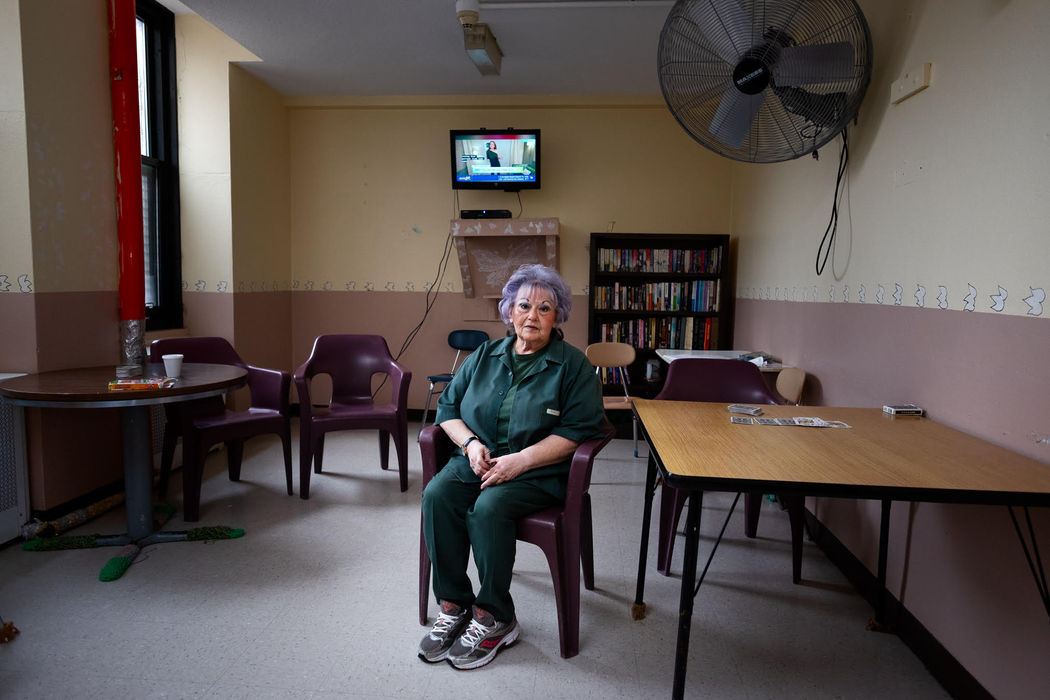
I have also been thinking about the power of the narrative presented within each image and the importance of photographers such as Sara Bennett, whose work is featured in Fragments of Self. If we rely solely on altered images that so easily bounce around the social sphere, how are we ever to fully understand the stark realities of particular facets of our society? Such as the hidden-away world of the carceral system.
Sara began her career as a public defender. After working as an appellate attorney for close to two decades, she began photographing current and formerly incarcerated women, primarily those with life sentences, both inside and outside of prison. She uses photography to draw attention to the problems of mass incarceration.
As someone who recently had the opportunity to work inside a women’s prison, I am attuned to the need for such documentation. Much of America is blind to the realities of this antiquated system while lacking an understanding of who is inside. Sara’s photographs personalize her subjects and reveal their humanity and dignity. The people locked up are frequently not who the public thinks they are, and Sara’s images help to reveal that truth.
The thing that struck me most during my time of teaching at the California Institute for Women in Chino, California, was the humanity, humor, and character of the women in my class. People sometimes asked if I was afraid of being in the space, imagining TV crime shows as their reference point. Sara’s photographs help to alleviate that stereotype. Her photographs present fragments of her subjects' individual selves.
Life is not always what it seems. People are not always who we believe they are. And photographs do not always tell the whole story... especially if they are altered, cropped, and photoshopped. Yet, an image frequently provides us with a depth and understanding that words alone cannot. The next time that you see a portrait of someone, try to spend more than the average 8 seconds that people spend looking, and ask yourself what you see. Who is behind the image, and what are the layers of the person sitting before you? Chances are, there is far more to the story.
-trw