
Girl Shrine: a story.
sometime beginnings start with an end.
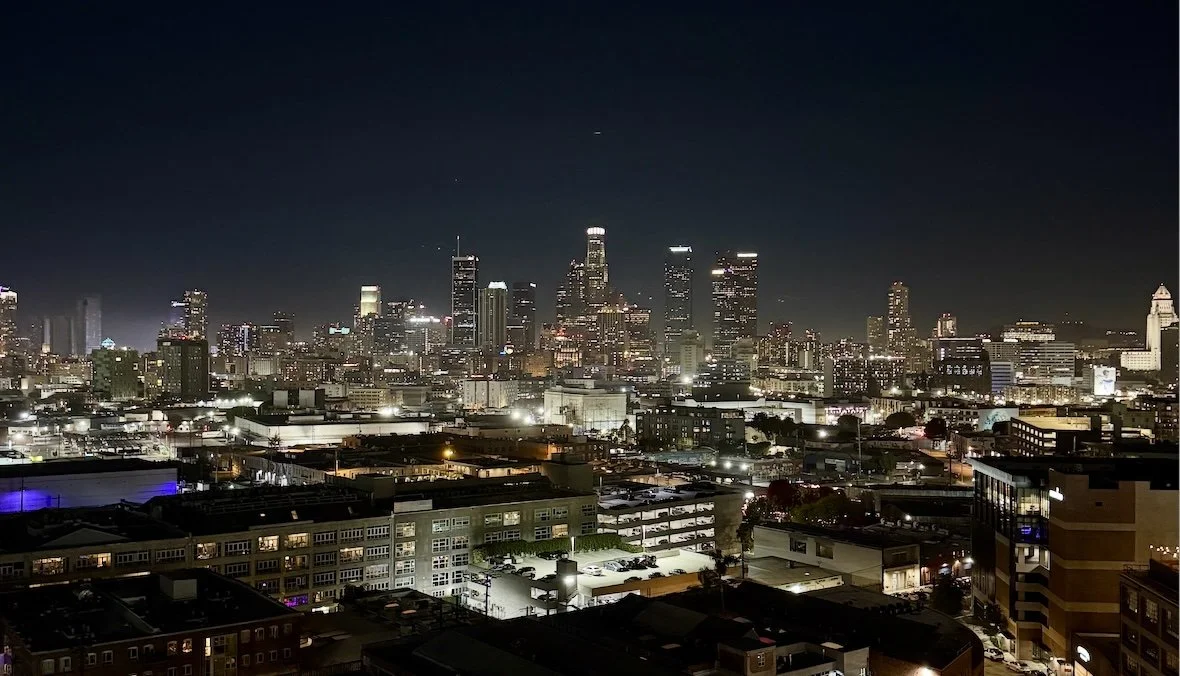
At the age of 26, I left the shrine of my girlhood in Southern California. Los Angeles always felt like an uncanny attempt at perfection. A mirage. Some sort of artificiality of an idealized beauty. However, there always seemed to be some deep, nefarious compulsion stewing below its surface where people went insane, losing themselves in money or fame or fucking or drinking or drugs or, in the worst of situations, all of the above.
I was visiting the city in June, where instead of perfect Hollywood blue skies, grey dark clouds sat heavy and low on the horizon. The air was thick with its heat and the foreboding of a storm soon to come. I found the days moving painfully, monotonously, slowly, like trudging through thick mud with my nose scrunched up, and dirt caked beneath my fingernails. Los Angeles was slow. It was a city of sedation. My California native mother would say it was slow like sweet honey. Relaxation and leisure and idleness marked by beautiful orangey yellows. It was not beautiful sweet honey. It was putrid sludge. It was a city of smog and plastic and chlorine and unsexy heat and sunburns and acrid odors.
During the summers in New York City, where I lived, the heat became so boiling and thick you had to wade through it, partially naked, sweaty, wet, raw, and depraved. I would groan and grunt and huff and often found myself becoming angry and euphoric all at once. New York City was never known for its picturesque beauty the same way California was. It was known for its dirty grime, the rats and cockroaches and pigeons, the piles of trash bags collecting on the street. The stench of rotten food, piss, body odor, cannabis, cigarettes, shit, and the yeasty mildew of beer marking dingy, seedy bars. But I always felt hidden within all the dirt and grime and ugliness. I love the morbid, sadistic beauty found in hiding.
I came to Los Angeles for a wedding for a couple I had known since high school, and whose friendship followed me into college without a second thought. Like it was the natural succession of our lives together. This passive, happenstance friendship lingered until recently, when I realized I might actually hate them. I felt like I was a lobster being slowly boiled alive and didn’t realize my hatred until it was bubbling all around me, scorching my body until it killed me.
Quinn and Amalie. I had been a witness to the many chapters of their relationship and the ways they grew and evolved as people. Until I hardly recognized the shy, gentle girl and the happy, loving boy from my youth. I remember when they first started sitting together in our 4th period class, riding home together every day. The sweet honeymoon phase of high school sweethearts never seemed to leave them. At least outwardly. But I had seen it all, even if others didn’t notice. I noticed when they stopped leaving together for weeks in our second semester of junior year. In freshman year of college, how many times I had overheard them fighting in the next dorm room over. By the end of senior year, that adoring stare that Amalie always gave Quinn was replaced by a glare seeping with spitefulness. However, their slow-building hatred also seemed to be accompanied by an intense, passionate display of affection. Their love and hate were always interwoven and interchangeable.
Quinn’s father bought them a three-bedroom, beige house in Pasadena right after college, and they’ve stayed there ever since. I moved East, desperate to get out of the sticky gunk of Los Angeles. As distance and time grew, I found talking with them was increasingly rare, and I began thinking about them less and less. My recent memories of them were filled with combative conversations, jealousy, and my own self-deprecation that they seemed to savor. We had all turned into uglier versions of ourselves.
The crescendoing silence that had been building between us was broken one day in January when I received a cream envelope in the mail with curled letters and dried rose petals announcing their engagement, and an invitation to the wedding. That same night I got a call from Amalie that was filled with squeals of excitement and the bubbling flow of conversation. I had forgotten how simple, easy, and even endearing it was to talk with Amalie. But it also always brought an air of competitiveness. The boasting and bragging of a life I never wanted, a life—my life— they could simply never fathom.
Amalie had asked me if I would be one of her bridesmaids. A question that felt like it had popped out of her mouth, unplanned, in a tone where Amalie seemed just as surprised as I was by the idea. In that same surprised, strained voice, I said yes. It had only seemed natural to say yes. It was instinct to say yes. Yet, I was simultaneously filled with dread stewing in the pit of my stomach. I was already thinking of the airfare costs, the amount of time I would have to take off work, the money spent, the money lost. But little voices in my head reminded me that I knew them from childhood. They were my oldest friends. She was still that same sweet girl, and he was the soft-spoken boy, even if it was buried under an exterior of glares, intolerance, and expectations they never seemed to match.
I had never been to a wedding, let alone been a bridesmaid, but Amalie assured me I wouldn’t have any duties except for the rehearsal and purchasing my bridesmaid dress. The dress! That long, silky, rose pink dress that cost more than my rent. I had spent the following weeks trying to figure out how to budget for it, until I realized it was impossible. That inevitably resulted in me sheepishly calling Quinn and Amalie a month before the wedding. My tail tucked between my legs, I told them I couldn’t afford the dress. Part of me thought that they would offer to cover it. The two of them had come from well-off families and had accumulated wealth themselves. Both had acquired high-paying jobs after college. But I was wrong. Instead, I was met with an argumentative tone and frustration that I had waited to tell them. I could tell that there was more rage stewing in Amalie than she let on. I still planned to attend the wedding, but I would not be a bridesmaid. Guilt and empty obligations led me to go, and I found myself in the city I thought I would never return to. I felt myself being petulant, and the ugliness I had left behind started following me again.
My stay before the wedding was met with silence from Quinn and Amalie, and the dinner plans we'd made were canceled. I was alone in this uncanny mirage of a city, picking at my skin and stewing in my own self-pity.
When the wedding came, I adorned the fanciest dress I had, a black tulle dress, with my favorite leather jacket and my favorite Doc Martens boots. Amongst kitten heels, soft dresses, and crisp tuxedos, I felt the stares not necessarily of judgment but, moreover, confusion, a curiosity reminiscent of the way a child sees a reptile in a zoo for the first time.
The ceremony was long and slow and aching. My skin felt burning, itchy, and restless. I shuffled and tapped my feet rapidly and shared strained smiles with the guests around me. Jadedness was pooling inside me, but in a glimmer of love I glanced to the bride and groom, and I saw a look I had not seen since our senior year of high school, a look that I had thought I wouldn’t see again. A gaze of love and sweetness and benevolence. Quinn crying and Amalie smiling between sniffles. It was a love I missed, and a love I found myself wishing for them.
That pain and anger and anxiety that I had carried throughout our friendship, the turmoil that I had to wade through, did not entirely disappear because I had watched them say their vows. I still remembered the arguments and small humiliations, the ways I had felt diminished and the strange resentment I had accumulated without ever deciding what to do with it. But at the same time, witnessing the tears in Quinn’s eyes and Amaile’s smile, I could not help but remember why I had loved them in the first place. It was difficult to reconcile the people I had loved for so many years with the people I had resented. Maybe they had not become entirely different people, but maybe I had simply become old enough to see parts of them I had once been too young to notice.
I uncomfortably wondered how much of my anger had really been about them. I had spent years imagining I escaped something when I moved across the country, believing that leaving Los Angeles and them also left that version of myself behind. But sitting there, watching them promise themselves to one another, I could feel that old version of myself still sitting beside me. She was embarrassed and jealous and angry. And she loved them. Both things were true. Sitting together in unease, neither seemed willing to cancel the other out. I didn’t forgive them exactly. I didn’t suddenly understand everything that had happened between us, and I didn’t know if I wanted them back in my life. But I could admit to myself that I had loved them once, and perhaps in some small, strange way, I still did. Their happiness did not erase the past. It existed beside it. For the first time, I had felt less compelled to decide which feeling was the correct one.
After the ceremony, I was seated at the very farthest table, seated next to the great aunts and uncles who were wrinkled like sour prunes. It was a scene of sandy white, brown, and beige tuxedos. I wasn't surprised by the placement, but I was surprised by my relief. I was grateful for the distance from the married couple. In just a couple of hours, this evening was teaching me that distance was peace. Separation was peace. I imagined a life for Quinn and Amalie that would continue without me. They would leave that night and return to their beige house. They would be married until death took them both. They would have babies, and those babies would have more babies, and they would have sweet dreams and vacations on ski mountains, filled with ordinary rituals that make life feel permanent. And I realized I didn't want a place in that life. There was a relief in imagining myself absent from it. I didn’t have to keep myself tethered to the person I had been when we were young. They would have their beautiful long life, and I would have mine.
The end of the night felt like movie stills of a bittersweet reflection of life before we all evolved into newer versions of ourselves. I chose to smile and dance and find joy in a room full of people that I thought were infected with rot. I chose to find a quiet sense of peace in that room, filled with giggling strangers. I put a shrine of my girlhood in that room and spent the night lighting its candles and adorning it with roses and daffodils and sunflowers, where it would remain, untouched, unvisited.
….
My weekend, which felt like walking with weak knees from one obligation to another, needed to end with something better.
In all my memories of Los Angeles that were stained by anger and festering, there was one lone, distant figure who stood out. Like oil in water, he was nothing like my image of Los Angeles. I had met Lee in college. He was someone who I was mystified by in all pleasure, giddiness, and gratitude. He was tall, burly, and calloused. He was gentle and kind. And he was the oddest man I knew. Covered in tattoos and leather, he stood out amongst the crowd of pastels and taupe that swarmed our college campus. Our friendship was one that consisted of partying, bitching, and laughing, and it held my softest, most tender memories. Our friendship had, for the most part, dissipated as I moved East, but I found myself reminiscing about it in moments of passivity: washing dishes, riding home on the subway, folding laundry.
I found a pay phone outside the wedding venue and called the number that I had from four years before, on a sliver of hope that it would be him on the other end. I had spent the entire weekend being reasonable and responsible, swallowing things I did not want to swallow. Finally, I wanted to do something without thinking, something that felt natural and familiar and strange all at once.
“Hello? What is this?” It was him, in that same gravelly voice.
I had told him where I was. Badly and out of order, I managed to tell him about the wedding and bridesmaid dress and Quinn and Amalie. About how I had spent the past three days feeling like I had made a terrible mistake coming back, the weekend of joyless monotony. He didn’t try to make sense of it for me. He just listened,, and 20 minutes later he came to get me on that same old motorcycle he'd had when we were in school together.
He looked exactly the same as I had remembered, just slightly older, with longer hair that brushed past his shoulders now. The same bright blue eyes and wide smile that always made him look like he was on the verge of a laugh. His hands had new scars, and there were the same old callouses and wrinkles. He hugged me the way I missed, without realizing it. He smelled like American Spirits and cedar wood. I was twenty again, standing outside of a party I didn’t want to be at, waiting for him to tell me where we were going next.
That night, we slipped right back into that old rhythm again, laughing and bitching about life and reminiscing as we had done the day before. He rode me around on his bike while I dug my fingernails into his ribs, but he never complained, just laughed.
He took me to the Hollyhock House in East Hollywood. We ate bad food and drank worse beer on top of a hill and talked and laughed and talked some more until the sun was peeking from behind the mountaintops.
I had spent the entire weekend with an image of Los Angeles that was ugly, swollen, artificial, and slow. Believing everything that was beautiful was only a surface covering something rotten underneath. But sitting there with Lee, I saw a version of the city I had never fully seen before. In that moment, it transformed into a city of solace and sublimity, and a different kind of sincere beauty.
I thought about Quinn and Amlie. I thought about the wedding, and the girl I had been when I first knew them. I thought about how badly I wanted the weekend to mean something definitive, to prove I had outgrown them, or they had wronged me, or that leaving had been the right decision. But nothing had been proven. All I knew was that certainty was not what I needed anymore.
It felt like my night had concluded in a truce, a trade that felt serendipitous, one that resulted in a delicately faint ending but gave me a divine beginning in return. I had come to Los Angeles to bury something, but instead I had found that not everything needed to be buried. Some things could simply be left where they were.
by anonymous
